
Founded by Max Farndale 1947 - 2018
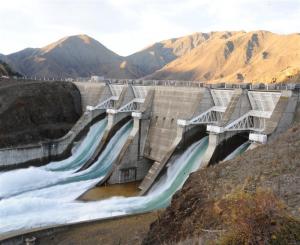
An ex-employee reader responds to the question “Do you want another Ministry of Works?”
For a while in the 1960s I worked as a labourer at the Ministry of Works Benmore dam site. It has been fashionable now for an entire generation to deride the MoW, everything it stood for, and everything it did. Yet I believe that the MoW is now worthy of some impartial scrutiny and especially so in the way in which it routinely went about its business in what are now viewed as critical spheres of activity in the productive sector. Among them:- * Quality Control * Staff induction and management * Technical training * Environment * SafetyFirst though a personal disclosure. When I signed up at Otematata other than a strong back there was little to recommend me in terms of formal qualifications. In the event I was hired and assigned to the single men’s camp, and told to turn up at a designated truck stop early the following morning to be taken to the site.
In fact, the next morning, I was dropped off at the site plant nursery. It was only much later that I realised that during my preliminary interview I had mentioned a very brief holiday job planting trees and a vague interest in silviculture in general. This had been carefully noted.
I was to find in the Otematata site nursery that everyone involved in it was highly qualified, notably the head nurseryman named Sid who had spent his entire career in the vocation. In various other roles in and around Benmore I was to find that the Ministry of Works had in common with the army a dislike of on-the-job training. You had to arrive at the job, whatever it was, already trained for it.
The planting out of the trees, notably willow and poplar poles, around the Benmore Lake area was then described as being for erosion control. But I noted too that care was taken that ornamental species were dotted in and around the more functional tree species.
After a while I was sent to another depot, this time with quite a different purpose, and known as The Reclaim. This was simply a vast open air yard reconditioning plant in which the wooden boxing used to shape and form the poured concrete was scraped bare so that it could be used again. Mechanical equipment was similarly scraped of concrete so that it too could be re-applied.
It was only much later that I came to realise that I had been involved, courtesy of the Ministry of Works, with what would now be readily described as recycling, or, more grandly, the environmental “movement.”
On the dam site itself I observed at every stage the calculating and re-calculating of every operation before it in fact took place. In terms of concrete pouring nothing happened at all without the sanction of what was known as the concrete “technician,” who generally turned out to be Dutch.
The Ministry of Works had a safety record that would stand up to this day. Nothing was taken for granted.
On one smoko break in the middle of a particularly arid part of the site area a group of us were sitting down and using the tyres of a Euclid as back rest.
A Land Rover came to an abrupt halt in front of the group. A foreman leaped out and crisply instructed us to move away. There had been a case somewhere of such a giant earthmover tyre bursting and injuring those close to it.
A criticism of the MoW nowadays is to the effect that the labouring force was stuck there in the labouring category and that there was no upward path in terms of promotion. In fact, I observed that any reasonably diligent youngster could work his way up. Again, and as with the army, you worked your way up through the ranks--- leading hand, charge hand, foreman. Then there was the opportunity of breaking into the commissioned officer class via an engineering degree.
Engineers ran the show. They exercised their authority by moral suasion. At the very top was the Project Engineer. The following tale will demonstrate the absence of any elitism.
On one occasion I was invited to a party at the house of a fellow-labourer who happened to be married and thus lived in the married people’s section of the town which featured uniform state house design white painted bungalows.
On inquiring who my friend’s neighbour was I was mildly surprised to learn that it was the Project Engineer who lived there, next door, in an identical house and with his wife and family.
An Englishman present was incredulous that someone who was personally responsible for the success or otherwise of one of the world’s major construction schemes (Benmore, pictured, was then the planet’s biggest earth-fill dam) could possibly be billeted next door to one of his labourers.
Yet this was the case. The Ministry of Works never fell into the trappings trap.
The days of which I write were sometime before the era in which the productive sector, like all other areas of human activity became engulfed in the newspeak required to blunt the sense of anything upon which might be placed an impolite construction.
The single men’s cabin camp had emblazoned on its main entrance a sign which stated “Women and Bailiffs not Allowed.”
The camp sergeant, as he would not now be described, was a larger-than-life fellow called Taffy. He was rumoured to be rich, owning a large farm in the region, but finding it more congenial to run the camp rather than his farm which was in the hands of a manager.
He was ultra frugal. A curious thing about the camp cabins was that in spite of their proximity to this immense electrical generation capability, each one of them was metered. Taffy, when the time came for a brew up, would always take his Zip to one of the communal areas, such as the laundry, in order to by-pass his own meter.
Anyway, on one occasion, I asked him about the sign at the gate, the one forbidding females.“Oh,” he responded in a matter of fact manner. “That is what the men here wanted.”
The Waitaki River stepped hydro scheme was the high water mark of the Ministry of Works. This was the culmination of its role as the national concentrated focus of civil engineering resources in order that gigantic works which otherwise would be unachievable were in fact achieved.
Nothing lasts for ever and the nibbling away at its authority was even then visible. Much earlier Bechtel did the Rimutaka Tunnel. Problems with construction tunnelling was an acknowledged deficiency in the Ministry of Works armoury and at Benmore I noticed how readily hard rock miners from the Balkans were welcomed into the polyglot fold.
Downer did Roxburgh. Utah, Manapouri. Then Codelfa, Tongariro. The writing was on the penstocks.
The Ministry of Works was swept away in the 1980s and its expertise sold-off to Malaysia in the form of Opus (Latin for work.)
So why am I writing all this, more than half a century afterward? It is because at an engineering conference in Wellington I, along with the rest of the audience, was rhetorically asked by a high-level speaker defending the government position on several contentious fronts .....
“Do you want another Ministry of Works?”This is exactly the kind of rebellion-quelling response that high-level officials are trained and qualified to give.
My answer, had I been required to respond individually would have been.“No I do not. The government can no longer run the risk of being both simultaneously operator and regulator.”
Had I been, in my imagination, pressed further I would have mentioned the perilous wire tripped by the state’s dual involvement as operator-cum-regulator in mining. Pushed, I might have mentioned its similar dodgy dual role in loosey goosy sectors such as entertainment.
As is the New Zealand way when the old Ministry of Works was declared a bad thing, everything about it was bad, and over the years, as the government speaker knew, got worse in memory with each year that passed by.
And yet....and yet.....Along with others who were there, I remember the expert but no-frills management style, the exceptional ability of the engineers and the loyalty and the diligence it all inspired in the workers of which for a while I was one.
From the MSCNewsWire reporters' desk - Friday 21 October 2016
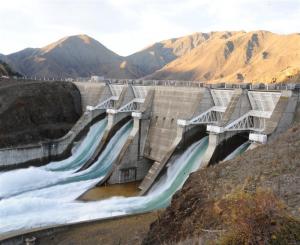
An ex-employee reader responds to the question “Do you want another Ministry of Works?”
For a while in the 1960s I worked as a labourer at the Ministry of Works Benmore dam site. It has been fashionable now for an entire generation to deride the MoW, everything it stood for, and everything it did. Yet I believe that the MoW is now worthy of some impartial scrutiny and especially so in the way in which it routinely went about its business in what are now viewed as critical spheres of activity in the productive sector. Among them:- * Quality Control * Staff induction and management * Technical training * Environment * SafetyFirst though a personal disclosure. When I signed up at Otematata other than a strong back there was little to recommend me in terms of formal qualifications. In the event I was hired and assigned to the single men’s camp, and told to turn up at a designated truck stop early the following morning to be taken to the site.
In fact, the next morning, I was dropped off at the site plant nursery. It was only much later that I realised that during my preliminary interview I had mentioned a very brief holiday job planting trees and a vague interest in silviculture in general. This had been carefully noted.
I was to find in the Otematata site nursery that everyone involved in it was highly qualified, notably the head nurseryman named Sid who had spent his entire career in the vocation. In various other roles in and around Benmore I was to find that the Ministry of Works had in common with the army a dislike of on-the-job training. You had to arrive at the job, whatever it was, already trained for it.
The planting out of the trees, notably willow and poplar poles, around the Benmore Lake area was then described as being for erosion control. But I noted too that care was taken that ornamental species were dotted in and around the more functional tree species.
After a while I was sent to another depot, this time with quite a different purpose, and known as The Reclaim. This was simply a vast open air yard reconditioning plant in which the wooden boxing used to shape and form the poured concrete was scraped bare so that it could be used again. Mechanical equipment was similarly scraped of concrete so that it too could be re-applied.
It was only much later that I came to realise that I had been involved, courtesy of the Ministry of Works, with what would now be readily described as recycling, or, more grandly, the environmental “movement.”
On the dam site itself I observed at every stage the calculating and re-calculating of every operation before it in fact took place. In terms of concrete pouring nothing happened at all without the sanction of what was known as the concrete “technician,” who generally turned out to be Dutch.
The Ministry of Works had a safety record that would stand up to this day. Nothing was taken for granted.
On one smoko break in the middle of a particularly arid part of the site area a group of us were sitting down and using the tyres of a Euclid as back rest.
A Land Rover came to an abrupt halt in front of the group. A foreman leaped out and crisply instructed us to move away. There had been a case somewhere of such a giant earthmover tyre bursting and injuring those close to it.
A criticism of the MoW nowadays is to the effect that the labouring force was stuck there in the labouring category and that there was no upward path in terms of promotion. In fact, I observed that any reasonably diligent youngster could work his way up. Again, and as with the army, you worked your way up through the ranks--- leading hand, charge hand, foreman. Then there was the opportunity of breaking into the commissioned officer class via an engineering degree.
Engineers ran the show. They exercised their authority by moral suasion. At the very top was the Project Engineer. The following tale will demonstrate the absence of any elitism.
On one occasion I was invited to a party at the house of a fellow-labourer who happened to be married and thus lived in the married people’s section of the town which featured uniform state house design white painted bungalows.
On inquiring who my friend’s neighbour was I was mildly surprised to learn that it was the Project Engineer who lived there, next door, in an identical house and with his wife and family.
An Englishman present was incredulous that someone who was personally responsible for the success or otherwise of one of the world’s major construction schemes (Benmore, pictured, was then the planet’s biggest earth-fill dam) could possibly be billeted next door to one of his labourers.
Yet this was the case. The Ministry of Works never fell into the trappings trap.
The days of which I write were sometime before the era in which the productive sector, like all other areas of human activity became engulfed in the newspeak required to blunt the sense of anything upon which might be placed an impolite construction.
The single men’s cabin camp had emblazoned on its main entrance a sign which stated “Women and Bailiffs not Allowed.”
The camp sergeant, as he would not now be described, was a larger-than-life fellow called Taffy. He was rumoured to be rich, owning a large farm in the region, but finding it more congenial to run the camp rather than his farm which was in the hands of a manager.
He was ultra frugal. A curious thing about the camp cabins was that in spite of their proximity to this immense electrical generation capability, each one of them was metered. Taffy, when the time came for a brew up, would always take his Zip to one of the communal areas, such as the laundry, in order to by-pass his own meter.
Anyway, on one occasion, I asked him about the sign at the gate, the one forbidding females.“Oh,” he responded in a matter of fact manner. “That is what the men here wanted.”
The Waitaki River stepped hydro scheme was the high water mark of the Ministry of Works. This was the culmination of its role as the national concentrated focus of civil engineering resources in order that gigantic works which otherwise would be unachievable were in fact achieved.
Nothing lasts for ever and the nibbling away at its authority was even then visible. Much earlier Bechtel did the Rimutaka Tunnel. Problems with construction tunnelling was an acknowledged deficiency in the Ministry of Works armoury and at Benmore I noticed how readily hard rock miners from the Balkans were welcomed into the polyglot fold.
Downer did Roxburgh. Utah, Manapouri. Then Codelfa, Tongariro. The writing was on the penstocks.
The Ministry of Works was swept away in the 1980s and its expertise sold-off to Malaysia in the form of Opus (Latin for work.)
So why am I writing all this, more than half a century afterward? It is because at an engineering conference in Wellington I, along with the rest of the audience, was rhetorically asked by a high-level speaker defending the government position on several contentious fronts .....
“Do you want another Ministry of Works?”This is exactly the kind of rebellion-quelling response that high-level officials are trained and qualified to give.
My answer, had I been required to respond individually would have been.“No I do not. The government can no longer run the risk of being both simultaneously operator and regulator.”
Had I been, in my imagination, pressed further I would have mentioned the perilous wire tripped by the state’s dual involvement as operator-cum-regulator in mining. Pushed, I might have mentioned its similar dodgy dual role in loosey goosy sectors such as entertainment.
As is the New Zealand way when the old Ministry of Works was declared a bad thing, everything about it was bad, and over the years, as the government speaker knew, got worse in memory with each year that passed by.
And yet....and yet.....Along with others who were there, I remember the expert but no-frills management style, the exceptional ability of the engineers and the loyalty and the diligence it all inspired in the workers of which for a while I was one.
From the MSCNewsWire reporters' desk - Friday 21 October 2016
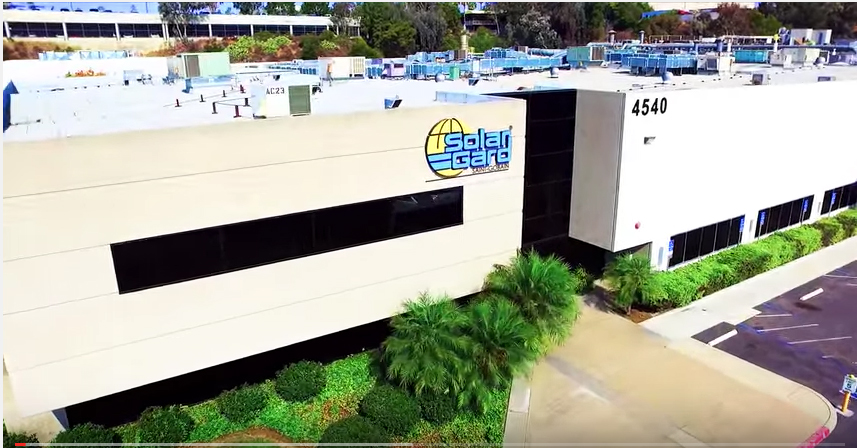 Solar Gard Window Film has released a new video (click image above to view) that shows how it is a world leading manufacturer of window film. This new video focuses on key components associated with its manufacturing plant and processes that centre on:
• Innovation • Quality Control • Customer Service
The video shows Solar Gard’s commitment to these key core points of control with its head office and manufacturing plant in San Diego USA.
As a world leading manufacturer of window film, this video shows the level of control and expertise that goes into manufacturing window film. It shows that customers who have the product installed can have complete faith and confidence in the product that they are having installed.
Here in New Zealand Solar Gard window film is distributed by SWF Distribution and its Managing Director, Mr Ross Eathorne is pleased to see the release of this video as it shows what Solar Gard represents. He goes on to say ‘It means that you can see why Solar Gard stands out from other brands and manufacturers and that Solar Gard window film gives our customers total value”
Eathorne says “The release of this video is a major step forward in being able to support the message we have being saying in that Solar Gard window film represents the absolute best value for money and that the products under this brand are world class.” (Click in picture to see video)
Solar Gard place a lot of value and benefit on using social media and in particular You Tube as a means for releasing information for people to easily access and use. To see what videos are available click here to take you through to the Solar Gard Australia/NZ You Tube channel
 Solar Gard’s Clearshield Pro Paint Protection Film was spotlighted on Fox 5 New York on Tuesday, in a segment that showcased its ability to invisibly protect both high-end luxury vehicles and classic cars. Click the image above to check out the full clip, featuring Solar Gard Dealer Lorenzo Narvaez of Lorenzo’s Tint in Bronx, NY
This email address is being protected from spambots. You need JavaScript enabled to view it.
COSTA MESA, Calif. (September 29, 2016) – Solar Gard, the global leader in advanced film technologies for sun and impact protection across the automotive, commercial and residential industries, today announced it has selected DRIVEN Public Relations, an international public relations and creative marketing agencyspecializing from inception in the automotive industry, as agency of record. A division of global glass and building technology icon Saint-Gobain – an organization whose 350-year legacy originated with the Hall of Mirrors within Paris’ Palace of Versailles – Solar Gard is now working with DRIVEN to elevate its brand and reintroduce Clearshield Pro Paint Protection Film (PPF), Ultra Performance Plus Window Film and full portfolio of automotive window films.
Clearshield Pro is an invisible protective film that forms a tough, clear barrier to act as body armor for a vehicle’s paint, protecting it from rock chips, scratches, and road hazards. The latest introduction to Solar Gard’s automotive window film portfolio, Ultra Performance Plus boasts advanced nano-ceramic technology that offers the ultimate in heat rejection for a vehicle’s interior, as well as a customized look and protection against harmful UVA and UVB rays.
Solar Gard products are sold at leading automotive dealers, tint installers and aftermarket equipment shops around the world.
“The Solar Gard story is incredible,” said Mike Caudill, president of DRIVEN Public Relations. “Not just from the technological innovation of its automotive products – but also the rich history of Saint-Gobain as a whole.The same company founded in 1665 to build glass for French kings – having engineered solutions for landmarks from the Statue of Liberty to the Louvre – is now helping to protect the vehicles of regular consumers everywhere. We look forward to sharing that story with the automotive world.”
“It was essential for Solar Gard to partner with an agency that really understands the automotive space to share our story of advanced technology and global leadership,” said Kendall Combs, global marketing director for Solar Gard. “We are well aware of DRIVEN’s reputation for success and effectiveness in the automotive industry and are assured they will truly help build our brand in the marketplace.
This email address is being protected from spambots. You need JavaScript enabled to view it.
COSTA MESA, Calif. (September 29, 2016) – Solar Gard, the global leader in advanced film technologies for sun and impact protection across the automotive, commercial and residential industries, today announced it has selected DRIVEN Public Relations, an international public relations and creative marketing agencyspecializing from inception in the automotive industry, as agency of record. A division of global glass and building technology icon Saint-Gobain – an organization whose 350-year legacy originated with the Hall of Mirrors within Paris’ Palace of Versailles – Solar Gard is now working with DRIVEN to elevate its brand and reintroduce Clearshield Pro Paint Protection Film (PPF), Ultra Performance Plus Window Film and full portfolio of automotive window films.
Clearshield Pro is an invisible protective film that forms a tough, clear barrier to act as body armor for a vehicle’s paint, protecting it from rock chips, scratches, and road hazards. The latest introduction to Solar Gard’s automotive window film portfolio, Ultra Performance Plus boasts advanced nano-ceramic technology that offers the ultimate in heat rejection for a vehicle’s interior, as well as a customized look and protection against harmful UVA and UVB rays.
Solar Gard products are sold at leading automotive dealers, tint installers and aftermarket equipment shops around the world.
“The Solar Gard story is incredible,” said Mike Caudill, president of DRIVEN Public Relations. “Not just from the technological innovation of its automotive products – but also the rich history of Saint-Gobain as a whole.The same company founded in 1665 to build glass for French kings – having engineered solutions for landmarks from the Statue of Liberty to the Louvre – is now helping to protect the vehicles of regular consumers everywhere. We look forward to sharing that story with the automotive world.”
“It was essential for Solar Gard to partner with an agency that really understands the automotive space to share our story of advanced technology and global leadership,” said Kendall Combs, global marketing director for Solar Gard. “We are well aware of DRIVEN’s reputation for success and effectiveness in the automotive industry and are assured they will truly help build our brand in the marketplace.
This email address is being protected from spambots. You need JavaScript enabled to view it.
WASHINGTON, /PRNewswire/ — A new study published by the nonprofit International Window Film Association (IWFA) shows professionally installed window film is the most cost-effective answer for residents when compared to other energy saving home improvement initiatives, such as upgrading insulation, air sealing, or installing new air conditioning or heat pumps. This study was carried out in Florida
This new report comes at a time when Federal studies reveal that Florida residents spend 40 percent more than their U.S. counterparts on their electric bills and use more than four times the national average for air conditioning to stay cool in the sunshine state, according to the U.S. Energy Information Administration.
“From a Florida consumer perspective, this new report confirms that window films are a smart investment to reduce their utility costs,” said Darrell Smith, executive director of the IWFA. “Window film can reduce energy consumption by reducing solar heat gain and cut cooling costs by as much as 30 percent, while at the same time allowing in natural light without the negative impact of harsh glare and potentially dangerous UV exposure,” said Smith.
Conducted by energy consulting firm ConSol, the methodology for the report utilized the Florida Department of Community Affairs Energy Code approved software for demonstrating energy code compliance. The research report compared the energy efficiency of internal and external window films for existing homes in the climate zones of Miami, West Palm Beach, Tampa and Jacksonville to:
Window films may also offer the fastest way for Florida to reduce its overall energy use as most of its 9,000,000 dwelling units were built before 1989. In fact, fewer than 25 percent of the state’s homes have double or triple pane window glazing (compared with almost 60 percent for the U.S. average) and 86 percent of homes rely on central air conditioning to stay comfortable.
The effectiveness of window films increase as the cooling degree-days increase (i.e.; the further south in Florida the more cost effective window films become). Window films reduce energy (kWh) two to four times more cost effectively than installing R-38 ceiling insulation over the existing R-30 ceiling insulation. Window films are eight to 15 times more cost effective than reducing the air infiltration of homes. Window films are three times more cost effective than replacing the air conditioner. The complete report can be seen at: www.iwfa.com.
Source: This email address is being protected from spambots. You need JavaScript enabled to view it.
Numbers of New Zealanders available for work are being incorrectly reported, says BusinessNZ.
The Salvation Army today claimed young unemployed New Zealanders are not getting employment opportunities because of unfair competition from migrant workers.
A Salvation Army report What Next - Addressing New Zealand's Youth Unemployment says 75,000 young unemployed New Zealanders would take work if it was available.
BusinessNZ says this number is incorrect, as official statistics show that job-seeker unavailability – rather than work unavailability – means the number of young New Zealanders available for work is far less than the 75,000 claimed.
MSD analysis of 70,000 unemployed New Zealanders in April 2016 showed that when corrected for unavailability factors, only around half that number could be regarded as actually available for work.
Unavailability factors included not being available for full-time work, not being available for work at weekends and not having a drivers licence.
BusinessNZ Chief Executive Kirk Hope says it is wrong to inflate claims of numbers actually available to work, when employers in key sectors such as hospitality and aged care are crying out for staff and cannot find New Zealanders for available jobs.
A LEADING plastics scientist has won an inaugural new innovators award for creating a process that allows manufacturers to replace glass components with light-weight plastic.
Dr Colin Hall and his colleagues at the University of South Australia’s Future Industries Institute have combined micron thin layers of plastics to develop a material that can replace glass in cars, aircraft, spacecraft, and even whitegoods - making them lighter and more efficient.
For his efforts he was awarded the Australian Prime Minister’s Prize for New Innovators. The team’s first commercial success is a plastic car wing-mirror. The Ford Motor Company has already purchased more than 1.6 million mirror assemblies for use on their F-Series trucks. The mirrors are made in Adelaide, South Australia, by SMR Automotive and have earned $160 million in exports to date.
The award recognises the contribution Dr Hall has made to bringing science and industry together to find practical solutions to problems that have a market value. “Universities can transition something that has been dreamed up in the lab right through to scale up to production,” Dr Hall said. “It shows that universities can work with industry hand in hand for commercial success.”
Dr Hall used his experience in the spectacle industry to solve a problem that was holding back the University of South Australia team’s development of the new technology.
He developed the combination of five layers of materials that will bind to plastic to create a car mirror that performs as well as glass and metal, at a fraction of the weight.
Workplace programme tackling airborne contaminants shifts into next phaseWorkSafe has launched a campaign to raise awareness of risks from welding fumes, wood dust and carbon monoxide in the manufacturing and construction sectors. The programme, which forms part of the Healthy Work strategic plan for work-related health, broadens WorkSafe’s focus on workplace airborne contaminants which initially started with silica and organic solvents.
Every year, an estimated 600-900 people die in New Zealand from work-related health issues and a further 5,000-6,000 are hospitalised with cancer, chronic obstructive pulmonary disease and other chronic illnesses from workplace exposure to airborne contaminants.
“There are multiple diseases associated with wood dust and welding fumes, including cancers, asthma and chronic lung conditions, while carbon monoxide can be a potentially deadly poisonous gas,” says Marcus Nalter, Programme Manager for Manufacturing and Construction at WorkSafe.
“The effects of exposure may not be visible for days, weeks, months or even decades. But workers in the construction sector are 20 times more likely to die of exposure to harmful airborne substances than from a workplace incident, and that rises to 25 times more likely for manufacturing workers.”
During 2015 and 2016, WorkSafe did nearly 1,000 proactive inspections focused on welding fumes and wood dust. In 150 of these, inspectors found risks weren’t being managed and enforcement action was required. “We will continue to educate and support employers and employees to recognise and manage these risks, and will take enforcement action where necessary to protect workers’ health,” says Mr Nalter.
“Employers have an obligation under the Health and Safety at Work Act not just to keep workers safe, but healthy too.”
Looking after workers’ health also has significant productivity benefits for businesses. Research has shown that one in 10 lost working days in New Zealand is due to ill health caused by work. The average cost of lost productivity is estimated to be $44,500 per case.
There are some good examples of employers taking health risks seriously. Placemakers Frame & Truss in Auckland has always monitored and managed air quality and already had a large extraction system. But in 2012, after legal limits for airborne dust were reduced, one area of the factory was exceeding limits. The business worked with a specialist ventilation engineer to develop a solution – building plywood booths around dropsaws to enable more efficient sawdust extraction.
“The booths were cheap to make, simple and effective, and they don’t restrict us in any way,” says Laurie Smith, Northern Manager for Placemakers Frame & Truss. “Workers helped design, build and test the solution and they were very happy to be part of the process. We worked together to create the best possible working environment.”
Mark Taylor, Naylor Love Construction’s Regional Health and Safety Manager for Canterbury, says the increased awareness of airborne contaminants is paying off. “The guys are working out that it is a lot nicer working with their saw or grinder plugged into a vacuum – and it’s cleaner,” says Mr Taylor. “They are more aware that ‘dust is dangerous’.”

Palace of the Alhambra, Spain
By: Charles Nathaniel Worsley (1862-1923)
From the collection of Sir Heaton Rhodes
Oil on canvas - 118cm x 162cm
Valued $12,000 - $18,000
Offers invited over $9,000
Contact: Henry Newrick – (+64 ) 27 471 2242
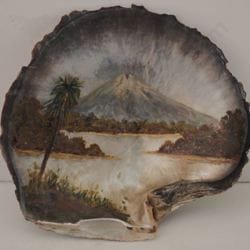
Mount Egmont with Lake
By: John Philemon Backhouse (1845-1908)
Oil on Sea Shell - 13cm x 14cm
Valued $2,000-$3,000
Offers invited over $1,500
Contact: Henry Newrick – (+64 ) 27 471 2242

|
|