
Founded by Max Farndale 1947 - 2018
Financial results for the year to 30 June 2016Strong container volumes offset a fall in log exports
Highlights
Parent EBITDA for the year to 30 June 2016 rose 2.2% to $125.7 million from $123 million in the prior year as container traffic rose 12.1% to a record of more than 954,000 TEUs - up from 851,000 TEUs in the prior year.
These gains were offset by a decline in bulk cargoes reflecting continuing challenges in New Zealand's forestry and agricultural sectors. Notably, log exports fell more than one million tonnes with declines also in imported stock feed and fertiliser.
Reported revenues fell to $245.5 million from $268.5 million, due to a $32 million decrease in revenue as a result of having to equity account Tapper Transport as an associate company within our Coda partnership.
Net Profit After Tax fell 2.4% to $77.3 million as the Company's largely completed $350 million five year investment programme resulted in higher depreciation charges, which are up $2.7 million in the current year alone.
Port of Tauranga Chairman, David Pilkington, said: "We are very pleased with the progress that has been made against our long term strategy to extend our freight catchment to become the country's leading freight gateway and to prepare to welcome the arrival of the large ships into New Zealand waters.
"Strategic initiatives such as our alliance with OJI Fibre Solutions, Kotahi and Zespri / Tauranga Kiwifruit Logistics continue to drive a strong increase in container volumes to the port. These initiatives have also insulated the Company from this year's significant reduction in log exports.
GOVERNMENT has provided a great way forward for exporters under its National Export Strategy (NES) initiative, says Green Gold Kava managing director Praveen Narayan.
"My small family-owned Fijian owned company knows no bounds and is eager to reach out to the world," he said.
Mr Narayan has always promoted his company's aims of "green gold kava globalisation" to his customers locally and overseas.
The kava exporting company, based in Savusavu, was one of the 11 successful companies awarded grants last week under the Government's NES initiative.
"My company was awarded $60,000 grant for the purchase of new kava pounding and packing machines," Mr Narayan said.
"At the moment I'm outsourcing our kava pounding but now it will be done at our facility under strict quality control."
He said the trust placed by Government on exporters to deliver quality Fijian made Products overseas had resulted in a surge in export of these products.
"With new and improved technology we are moving forward in the export market overseas and now our products are accepted more by the worldwide community," he said.
Green Gold Kava was also invited to be part of the Pacific Trade Invest (PT&I) Pasifika Festival delegation in March and the Pacific Periscope newsletter reported that being part of the delegation "has boosted kava sales for Green Gold Kava owner-exporter Praveen Narayan".
In a trans-Tasman first, a new international trade degree, launching at Victoria University of Wellington in 2017, will encourage students to work beyond traditional academic divides and succeed in the global economy.
The Master of International Trade, open to domestic and international students, offers a unique opportunity to understand international trade law, economics, and political economy, as well as a variety of cultural and critical perspectives impacting trade.
The degree will span four different faculties and schools—Law, Science, Humanities and Social Sciences, and Victoria Business School—giving students a unique perspective on international trade.
“New Zealand has a global reputation as a successful trading nation and is a respected player in international trade negotiations,” Vice-Provost (Research) Professor Kate McGrath says.
“Victoria is already highly regarded for study related to international trade. We are delighted to be taking our offering to the next level, with a degree programme that will be attractive to a range of students who will make their career contributing to the global economy through trade.”
Faculty of Law Professor Susy Frankel says trade concerns are at the centre of many policies, including those relating to primary industries, developing innovation, attracting inward investment, encouraging outward investment, as well as biosecurity, environmental and labour conditions and industry productivity. “The Master of International Trade offers the opportunity to study these aspects of international trade through the lenses of different disciplines.
“This is the only international trade degree in New Zealand and Australia that will include expertise from four different parts of the university, giving students an understanding of the competing interests in the trade sphere and the diversity of views and perspectives about those interests,” Professor Frankel says.
Professor John Overton, from the School of Geography, Environment and Earth Sciences, says being able to communicate and negotiate across disciplines is an important skill in the twenty-first century and reflects the nature and challenges of international trade.
Students in one discipline will benefit from study of related areas that have trade impacts, Faculty of Humanities and Social Sciences Pro-Vice-Chancellor and Dean Professor Jennifer Windsor says. “For example, international relations students should understand the legal rules of international trade law, and law students will benefit from understanding the policy and political economy context of international legal agreements and institutions.”
The core courses in the degree, which can be completed in a year, will cover:
“Discussing Māori involvement in international trade will be an important part of this degree,” says Dr Maria Bargh, the Head of Te Kawa a Māui–School of Māori Studies. “The programme will include content from Māori perspectives, both historical and contemporary, as well as the impacts on Māori and the country’s natural resources of the New Zealand Government entering international trade agreements.”
Enrolment for the new degree will open on 1 October 2016, and full course details, including fees, will be available then on the university’s website.
More information is available on our website: www.victoria.ac.nz/law/about/news/victoria-offers-unique-international-trade-degree/questions-and-answers/
The Reserve Bank today released a Bulletin article reviewing forecast performance. The article uses forecasts from a suite of statistical models as a benchmark to evaluate the performance of forecasts prepared for the Reserve Bank’s quarterly Monetary Policy Statements.
It concludes that since 2003, MPS forecasts have shown similar forecast accuracy to the statistical model forecasts, with slightly more accurate forecasts for near-term interest rates and GDP growth, and inflation at longer horizons.
Neither the MPS forecasts nor the statistical model forecasts performed well at forecasting the exchange rate. The Bank has under-predicted the level of the TWI, leading to lower-than-expected tradable and headline inflation. In recent years, non-tradable inflation has also been lower than forecast, while forecasts for GDP have been largely unbiased.
Reviewing forecasting performance is an important part of the Bank’s forecasting process as it helps to ensure the understanding of economic relationships and drivers is up-to-date. Monitoring forecast errors also enables the Bank to evaluate its monetary policy performance and consider whether it has responded reasonably to new information.
The article published today follows the recent publication of two other Bulletin articles which assessed the Bank’s forecast performance compared to external forecasters and provided a behind-the-scenes look at OCR decision making. These articles were recently referenced in a speech by Assistant Governor John McDermott explaining how the Bank formulates and assesses its monetary policy decisions.
Read the article: Evaluating the Reserve Bank’s forecasting performance
Intel believes the days of using copper wires for data transfers, both between computers and inside of them, are numbered because optical communications are on the horizon.
The chipmaker has started shipping silicon photonics modules, which use light and lasers to speed up data transfers between computers.
The silicon photonics components will initially allow for optical communications between servers and data centers, stretching over long distances, said Diane Bryant, executive vice president and general manager of Intel's Data Center Group.
Over time, Intel will put optical communications at the chip level, Bryant said during a keynote at Intel Developer Forum on Wednesday. That means light will drive communications inside computers.
SAN DIEGO, Aug. 17, 2016 /PRNewswire/ -- ResMed (NYSE: RMD), the world's leading tech-driven medical device company and innovator in sleep-disordered breathing and respiratory care, announced today it has filed legal actions with the United States International Trade Commission, the United States District Court for the Southern District of California in San Diego (3:16-cv-02072-JAH-MDD), as well as courts in New Zealand and Germany, to stop the infringement of its patented technology by New Zealand-based medical device manufacturer Fisher & Paykel Healthcare.
"ResMed is known for its commitment to providing patients with high-quality products that result from sustained, substantial investment in research and development and a focus on each user's needs," said ResMed global general counsel and chief administrative officer David Pendarvis. "ResMed's proprietary designs and superior innovative technologies reflect these priorities."
"We remain steadfast in our commitment to defend our intellectual property wherever necessary to ensure patients receive the high-quality care they deserve. We are confident that when the courts hear all the evidence, ResMed will prevail on its case and defeat any claims asserted by Fisher & Paykel."
In the U.S. International Trade Commission, ResMed seeks an injunction banning importation of Fisher & Paykel Simplus full face mask, Eson nasal mask and Eson 2 nasal mask. In the U.S. District Court for the Southern District of California, ResMed asserts that Fisher & Paykel Healthcare's Simplus full face mask, Eson nasal mask and Eson 2 nasal mask infringe ResMed's patents relating to modular mask systems, headgear design, and cushion design. ResMed also asked the San Diego court to invalidate patents that Fisher & Paykel recently asserted against ResMed, to declare that ResMed does not infringe those patents, or both.
ResMed has also initiated preliminary injunction proceedings in Germany, and a suit in New Zealand, to stop infringement in those countries. In the German proceedings, the District Court in Munich has already entered two preliminary injunctions to stop the sale of Simplus, Eson and Eson 2 masks in Germany based on infringement of German parts of two of ResMed´s European patents. In New Zealand, ResMed is asking an Auckland court to stop Fisher & Paykel from manufacturing and exporting infringing masks from that country.
About ResMedResMed (NYSE: RMD) changes lives with award-winning medical devices and cutting-edge cloud-based software applications that better diagnose, treat and manage sleep apnea, chronic obstructive pulmonary disease (COPD) and other chronic diseases. ResMed is a global leader in connected care, with more than 2 million patients remotely monitored every day. Our 5,000-strong team is committed to creating the world's best tech-driven medical device company – improving quality of life, reducing the impact of chronic disease, and saving healthcare costs in more than 100 countries.ResMed.com | Facebook | Twitter | LinkedIn

Kind Traveler is a new site that lets travelers donate to charity and receive exclusive discounts to luxury hotels.
Way back in 2011, we covered a platform that organizes trekking tours in Southeast Asia, donating a percentage of their revenue to support female entrepreneurs. Now, sustainable travel is available to the less adventurous: Kind Traveler enables luxury holidaymakers to donate money to charity in exchange for exclusive deals with sustainable hotels.kind-traveler-sustainability
The enterprise works in partnership with a number of ‘Kind Hotels’, whose sustainability initiatives are displayed on the Kind Traveler site. Customers select a destination and choose from the 10 cause areas — disaster relief, animal welfare and environment among others. The platform then enables users to donate to any of their charity partners from a selected list of either local or global charities. Under animal welfare, for example, holidaymakers can choose the local charity, Pacific Marine Mammal Centre, or a global one such as Wildaid. In exchange for a donation, customers are offered exclusive rates — a donation of USD 10 can result in discounts as high as 20 percent. Those booking can choose from a growing list of locations, among them New York, Miami, Mexico and the Caribbean.Luxury resorts can often stand in high contrast with the country’s overall economic situation, and tourism often doesn’t contribute to national economic growth. When tourists are aware of this contrast, it can make for an uneasy experience. Kind Traveler’s ‘give and get’ model proposes to solve this problem. As Jessica Blotter, CEO and Co-founder explains, the idea for the enterprise began when on holiday in Belize — finding it difficult to get excited about visiting the Mayan ruins while ignoring the surrounding devastation, they made a decision to help.
According to a recent study, one of the main barriers to the growth of sustainable travel is visibility. Are there more innovations that could help raise the profile of sustainable tourism?
Website: www.kindtraveler.comContact: This email address is being protected from spambots. You need JavaScript enabled to view it.

About 104 million Chinese took to the skies on domestic, regional and international flights last year and within six months they, and others like them, may be chatting on mobile phones during their flights writes peter Needham for eGlobal.
Authorities in China are considering lifting restrictions on the use of mobile phones while airborne. The changes are likely to take force later this year or early next.
Bloomberg news service has quoted Zhu Tao, director of the air transportation division at the Civil Aviation http://www.itehcmc.com/Administration of China, confirming that changes are pending to rules that currently limit the use of electronic devices during flights.
The changes, which follow new regulations introduced about three years ago in the US and Europe, will open up Chinese airspace to in-flight connectivity hitherto available only in developed markets.
If the green light is given, Chinese passengers will be able to surf the internet and shop online. They will probably be able to use Smartphones and applications like WeChat. They may shop, or even trade stock.
Around the world, the proliferation of voice-based platforms like Skype and WhatsApp could see the skies becoming a very loud place. The trend my be more pronounced in China, world’s most populous nation. The Chinese are keen on shopping as well as chatting. The global market for in-flight e-commerce is set to reach USD 1.7 billion by 2020.
Already, China Eastern is spending about USD 300,000 to fit each of its planes with Wi-Fi.
The Future of Making Things articulates that technology is changing how customers design and make things. This is just one of the topics that will be presented at the CADPRO Systems organised Autodesk Manufacturing Event being held in Auckland next Wednesday the 24th of August and Christchurch the following day. 
Autodesk has always been focused on helping customers through disruptive changes in their technology. Autodesk is uniquely positioned to create the next generation of tools for designers and makers of things, and to lead them through the transition. Join presenter Russell Speight, Autodesk Australia at this week’s events in Auckland or Christchurch.

How connected products are changing the landscape for manufacturers and why it's going to be critical to your success. This is just one of the topics that will be presented at the CADPRO Systems organised Autodesk Manufacturing Event being held in Auckland next Wednesday the 24th of August and Christchurch the following day.
The era of connection is upon us. Already consumers expect to be connected to their products whenever they want and wherever they are. And over the next decade the expectation is that the number of connected devices is going to significantly increase, enabling companies to provide unique customer experiences, incorporate agile design and implement predictive maintenance.
Together we'll look at how we, as an industry, need to look at the next generation of products we design and services we offer as a means of growing company revenue and possibly implementing Products as a Service.
This session will be very practical looking at genuine applications for manufacturers. Join presenter Matthew McKnight, Autodesk Australia at next week’s events in Auckland or Christchurch.

Palace of the Alhambra, Spain
By: Charles Nathaniel Worsley (1862-1923)
From the collection of Sir Heaton Rhodes
Oil on canvas - 118cm x 162cm
Valued $12,000 - $18,000
Offers invited over $9,000
Contact: Henry Newrick – (+64 ) 27 471 2242
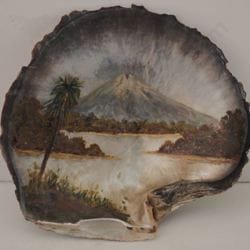
Mount Egmont with Lake
By: John Philemon Backhouse (1845-1908)
Oil on Sea Shell - 13cm x 14cm
Valued $2,000-$3,000
Offers invited over $1,500
Contact: Henry Newrick – (+64 ) 27 471 2242

|
|