
Founded by Max Farndale 1947 - 2018

Orderly and methodical marketing was his trademark
The death at 65 after a short illness of vineyard proprietor Richard Riddiford will recall for many his remarkable organisational feat in instituting the Wellington region’s main food and wine exposition, Toast Martinborough. This required a two phase management. The first in bonding together the Martinborough district’s numerous and by definition, individualistic vineyards. The second in the precision marketing so that the event was perceived as a gastronomic one.
He was successful in both these steps which he capped by ensuring that the annual event was always sold as if tickets were in extreme shortage. This technique of premium presentation gave the event the type of aura that New Zealanders usually associate with international festivals of this type.
His stern even forbidding demeanour was of much service in all this. His friend Auberon Waugh the wine writer and social critique present at the inaugural ceremonies attendant upon the launch of Toast Martinborough dubbed him Rochester after the smouldering Bronte anti-hero.
Richard Daniel Riddiford was born into a family some might say dynasty that started with the advent of the New Zealand Company. His great grandfather was the storied “King” Riddiford who consolidated the family’s holdings in South Wairarapa and then extended them into the Central Districts.
Richard Riddiford honed his methodical and orderly marketing skills while working his way through the ranks of Thos Borthwick then responsible for 30 percent of all New Zealand’s meat exports.He returned to New Zealand to organise the Palliser Estate wine company of Martinborough of which he became the managing director.
He remained in this role until just a few months prior to his death when in his typically measured way he transferred all the reins to a much younger management group.
He remained always conscious of what he saw as an inherited obligation to his community. He will be remembered for the generous way in which he freely placed at the disposal of others his natural dignity in presiding over rites of passage and just as willingly his comprehensive commercial organisational talents.
From the MSCNewsWire reporters' desk Friday 5 August 2016
The Institute of Directors have realsed a guide on how to get on board with diversity by taking an active, conscious and thoughtful approach to how you support diversity in your boardroom and organisation.

International packaging company Orora is increasing its New Zealand manufacturing capabilities, with an injection of more than $25 million in its three key sites in Christchurch, Hastings and Auckland.
Orora supplies packaging products and services to the fresh produce, meat, dairy, grocery, fast-moving consumer goods and industrial markets in Australasia and North America. In New Zealand, the company delivers fibre packaging through its corrugated packaging business, Orora Kiwi Packaging.
International packaging company Orora is increasing its New Zealand manufacturing capabilities, with an injection of more than $25 million in its three key sites in Christchurch, Hastings and Auckland.
Orora supplies packaging products and services to the fresh produce, meat, dairy, grocery, fast-moving consumer goods and industrial markets in Australasia and North America. In New Zealand, the company delivers fibre packaging through its corrugated packaging business, Orora Kiwi Packaging.
“Our investment in a new state-of-the-art Flexo Folder Gluer (FFG) — a complete box-making solution that increases capacity, print capability and print quality — in our Christchurch facility reinforces our strong business confidence in the New Zealand South Island as it rebuilds following the earthquakes that severely impacted the region,” said Orora Chief Executive Officer and Managing Director Nigel Garrard.
Investment in Orora’s Hastings operations includes a new FFG, a rotary die cutter to increase the site’s capacity and a new automation solution for its latest die cutter. The company has also created 40 new jobs in the Hawkes Bay area.
Orora has also approved further capital investment in its Auckland operations for a new-generation FFG and a materials handling system to reduce repetitive handling.
An Orora release August 3, 2016
New Zealand First is shocked Spanish firm Acciona is a ‘preferred bidder’ to help build the long overdue Warkworth to Puhoi Motorway that will likely end up being tolled.
“We have a government that is incapable of building houses and now it seems, roads,” says the Rt Hon Winston Peters, Leader of New Zealand First and Member of Parliament for Northland.
“So who on earth is doing the due-diligence in National given Acciona executives were arrested in Spain this year for corruption. Meanwhile the toll roads it has helped to build in Spain have gone bust.
“Several years ago, the UK’s Sunday Times reported that two of the firm’s senior executives were being investigated for the misappropriation of public funds, falsifying documents and of most concern, money laundering.
“As Member of Parliament for Northland, this is incompetence heaped upon incompetence because National continually over promises and under delivers.
“In 2009 ‘Mr Broke-it’ himself, Steven Joyce, told Parliament that the Wellsford to Puhoi motorway would be delivered by 2019. Yet here we are in 2016 and they haven’t even built a millimetre north of Puhoi that they have promised since 2009.
“Now National is talking 2022 but that’s only for half the job, being Puhoi to Warkworth. Aside from Mr Bridges knowing that this is not Northland but part of the Auckland Super City, half-baked aptly describes this underperforming Minister of Transport.
“Be under no illusion, any Private-Public Partnership means this will be a toll road given the Puhoi to Warkworth leg comes with a 25-year concession. Mr Bridges needs to come clean over when Northland will be connected and what role Acciona will play.
“Above all else, he must categorically rule out any direct or indirect donation Acciona may have made to National given its track record in funding political parties in both Canada and Australia,” Mr Peters said.
A press release from NZFirst August 1, 2016
Construction of the new Three-Runway System (3RS) at Hong Kong International Airport started August 1.
The eight-year construction of 3RS is expected to be completed in 2024, with the commissioning of the new runway in 2022.
Jack So Chak-kwong, chairman of the Airport Authority of Hong Kong; professor Anthony Cheung Bing-leung, Hong Kong's Secretary for Transport and Housing; professor K C Chan, Secretary for Financial Services and the Treasury, and airport CEO, Fred Lam, were the VIP guests at today's launch ceremony.
Four contracts for 3RS reclamation-related works were also signed by representatives of the AAHK and the contractors at the occasion.kick off So said: “The 3RS is a critical infrastructure project to support the aviation industry and the long-term economic development of Hong Kong.
"We urgently need this expansion project as HKIA’s existing two-runway system is reaching its full capacity soon.
"With the additional capacity to be provided by the 3RS, airlines can provide more destinations and more frequent flights, and passengers will have more choices and convenience.
"Some 139,000 man-years of construction jobs are expected to be created during the construction phase, with some 123,000 direct employments created upon the commencement of the 3RS operation.”
The construction entails reclamation of approximately 650 hectares of land, which will be completed in phases for the subsequent works such as the new runway, taxiway system as well as a Third Runway Passenger Building with 57 parking positions.
The Third Runway Passenger Building will be connected to Terminal 2 by a new automated people mover system. Terminal 2 will be modified and expanded in order to provide full-fledged terminal services with departure and arrival facilities.
The 3RS will also include a new high-speed baggage handling system, expanded road and transportation networks.
The scale of works is similar to the construction of a new airport.
To protect the environment, non-dredge methods including deep cement mixing will be adopted for land formation, while the 3RS buildings will incorporate a range of green and sustainable features in their design, construction and operational aspects.
Upon full-fledged commissioning, the 3RS will be able to handle an additional 30 million passengers annually, equipping HKIA with the capacity to handle around 100 million passengers and nine million tonnes of cargo annually by 2030 and meet Hong Kong’s long-term air traffic demand.In tandem with the kick-off of 3RS construction, AAHK will start collecting the Airport Construction Fee (ACF) on air tickets issued on or after August 1, 2016, for departing passengers at HKIA.
The ACF forms part of the financial arrangement for 3RS construction, which also includes borrowings and retaining HKIA’s operational surplus.
So adds: “While the constructon of 3RS is ongoing, we will not lose focus on constantly upgrading the HKIA.
"We are proud of the fact that our award-winning airport is the world’s third busiest international passenger airport and also the airport with the largest cargo throughput. But we cannot be complacent.
"Apart from strengthening management, we have set up a special task force to research into and develop new hardware and software with a view to further enhancing our efficiency and enriching passenger experience."
View from the topView from the topHappy Birthday!Happy Birthday!
SearchAll FeaturesSitemap
Copyright © 2016 Airport World Magazine. All Rights Reserved.
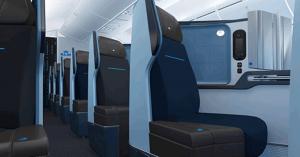
KLM has announced that it will modernise the World Business Class cabin interiors on all of its Airbus A330s. Passengers will be able to experience the new-look cabin on A330-operated services from early 2018.
The World Business Class cabin can already be found on KLM’s Boeing 787s, as well as retrofitted Boeing 777-200 and 747-400 aircraft. All of the carrier’s Boeing 777-300s will also have the new premium cabin by June 2017.
Among the highlights are fully flat seats, 16-inch in-flight entertainment (IFE) monitors with content in 12 languages, and ample storage space for personal items.
The addition of the new World Business Class cabin to the A330 fleet is part of KLM’s ongoing investment in enhancing passenger comfort, which has also seen the introduction of a new economy class product, investment in in-flight connectivity, and upgrades to the IFE system. - August 5, 2016
Tertiary Education, Skills and Employment Minister Steven Joyce has today welcomed figures that show a greater proportion of domestic degree-level students are enrolling in qualifications in STEM-related subjects (science, technology, engineering and maths).
A report released today, What are they doing? The field of study of domestic students/learners analyses the fields of study of domestic students in the New Zealand tertiary education system over the past eight years.

Tertiary Education, Skills and Employment Minister Steven Joyce has today welcomed figures that show a greater proportion of domestic degree-level students are enrolling in qualifications in STEM-related subjects (science, technology, engineering and maths).
A report released today, What are they doing? The field of study of domestic students/learners analyses the fields of study of domestic students in the New Zealand tertiary education system over the past eight years.
“The report shows there are more people enrolling and studying in qualifications for in-demand occupations that help strengthen and diversify New Zealand’s economy,” Mr Joyce says. “The Tertiary Education Strategy 2014-2019 set a target to prioritise getting industries the skills they need, this shows the tertiary sector is delivering.”
Last year students enrolled in engineering and related technologies at bachelors level or higher reached an all-time high of over 11,500, an increase of more than 3,500 or 44 per cent from 2008. In 2015, engineering students represented 6.5 per cent of all students studying at that level, up from 4.9 per cent in 2008.
The number of students enrolled in information technology at bachelors level or higher last year has increased by 33 per cent since 2008 to reach 11,360. This represented 6.4 per cent of students studying at that level in 2015, up from 5.3 per cent in 2008.
Health studies at bachelors level and above also increased, from 15 per cent of enrolments in 2008, to 18 per cent in 2015. There were 32,700 students studying in health disciplines in 2015.
“It’s great to see so many students engaged in areas where they’re likely to head into a solid, well-paying career where demand is high and likely to continue to grow.”
“We have re-balanced tuition subsidies to more accurately reflect the costs of provision, and that has encouraged universities to invest in growing places in some of these more expensive subject areas. On top of that, better and more accurate careers information is encouraging young people to choose these subjects.
Below bachelors degree level, there was an increase in the number of enrolments in the field of architecture and building. Between 2011 and 2015, the number of domestic students enrolled in Level 3 to 7 certificates/diplomas increased by 25 per cent to reach over 25,500. At Level 1 and 2, there was an increase of 59 per cent in enrolments in mixed field programmes, between 2011 and 2015.
“At the vocational level, the numbers reflect the emphasis we are placing on growing construction and infrastructure to meet the needs of New Zealand’s record building boom. At foundation Levels 1 and 2, the subject trends are responding to our deliberate focus on building literacy/numeracy and foundation skills, especially within the Youth Guarantee fees-free programme and second-chance learners.
“We need these trends to continue so we better match New Zealanders’ skill mix with the emerging needs of our industries.”
What are they doing? The field of study of domestic students/learners 2008-2015 is available at http://www.educationcounts.govt.nz/publications/80898/what-are-they-doing
More analysis of people enrolled at tertiary education providers can be found here http://www.educationcounts.govt.nz/publications/80898/profile-and-trends...

Tertiary Education, Skills and Employment Minister Steven Joyce has today welcomed figures that show a greater proportion of domestic degree-level students are enrolling in qualifications in STEM-related subjects (science, technology, engineering and maths).
A report released today, What are they doing? The field of study of domestic students/learners analyses the fields of study of domestic students in the New Zealand tertiary education system over the past eight years.
“The report shows there are more people enrolling and studying in qualifications for in-demand occupations that help strengthen and diversify New Zealand’s economy,” Mr Joyce says. “The Tertiary Education Strategy 2014-2019 set a target to prioritise getting industries the skills they need, this shows the tertiary sector is delivering.”
Last year students enrolled in engineering and related technologies at bachelors level or higher reached an all-time high of over 11,500, an increase of more than 3,500 or 44 per cent from 2008. In 2015, engineering students represented 6.5 per cent of all students studying at that level, up from 4.9 per cent in 2008.
The number of students enrolled in information technology at bachelors level or higher last year has increased by 33 per cent since 2008 to reach 11,360. This represented 6.4 per cent of students studying at that level in 2015, up from 5.3 per cent in 2008.
Health studies at bachelors level and above also increased, from 15 per cent of enrolments in 2008, to 18 per cent in 2015. There were 32,700 students studying in health disciplines in 2015.
“It’s great to see so many students engaged in areas where they’re likely to head into a solid, well-paying career where demand is high and likely to continue to grow.”
“We have re-balanced tuition subsidies to more accurately reflect the costs of provision, and that has encouraged universities to invest in growing places in some of these more expensive subject areas. On top of that, better and more accurate careers information is encouraging young people to choose these subjects.
Below bachelors degree level, there was an increase in the number of enrolments in the field of architecture and building. Between 2011 and 2015, the number of domestic students enrolled in Level 3 to 7 certificates/diplomas increased by 25 per cent to reach over 25,500. At Level 1 and 2, there was an increase of 59 per cent in enrolments in mixed field programmes, between 2011 and 2015.
“At the vocational level, the numbers reflect the emphasis we are placing on growing construction and infrastructure to meet the needs of New Zealand’s record building boom. At foundation Levels 1 and 2, the subject trends are responding to our deliberate focus on building literacy/numeracy and foundation skills, especially within the Youth Guarantee fees-free programme and second-chance learners.
“We need these trends to continue so we better match New Zealanders’ skill mix with the emerging needs of our industries.”
What are they doing? The field of study of domestic students/learners 2008-2015 is available at http://www.educationcounts.govt.nz/publications/80898/what-are-they-doing
More analysis of people enrolled at tertiary education providers can be found here http://www.educationcounts.govt.nz/publications/80898/profile-and-trends...

Palace of the Alhambra, Spain
By: Charles Nathaniel Worsley (1862-1923)
From the collection of Sir Heaton Rhodes
Oil on canvas - 118cm x 162cm
Valued $12,000 - $18,000
Offers invited over $9,000
Contact: Henry Newrick – (+64 ) 27 471 2242

Mount Egmont with Lake
By: John Philemon Backhouse (1845-1908)
Oil on Sea Shell - 13cm x 14cm
Valued $2,000-$3,000
Offers invited over $1,500
Contact: Henry Newrick – (+64 ) 27 471 2242

|
|