
Founded by Max Farndale 1947 - 2018
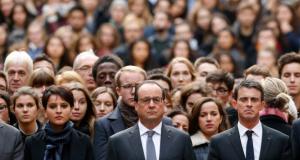
Problem hiding in plain sight
We asked MSC Newswire's European correspondent for an update on the emergency in France........
You have evaluated at close hand the terrorism in France. Are there any lessons that can be learned by New Zealand?We can see clearly an ingrained mind-set in both countries centred on the it-can’t happen here syndrome. The difference being that in France, it has happened there. We can see also a facilitating over-tolerance in both countries and at many levels of the community in both countries in regard to accepting and even condoning anti-social behaviourBe more specific here.I will. In both countries if the police in the interest of law and order are obliged to use force of arms in pursuit of their purpose and someone is shot the reaction is the same. It is that the police are always in the wrong, and that the person shot was always somehow in the right. It is like that.This sympathy for the perceived underdog is a characteristic in both countries?In France, and as I have noted before, this extreme tendency to see everything from the underdog’s point of view dates back to the French Revolution and is enshrined in law. In the New Zealand case it is part of the wider Ned Kelly larrikin syndrome. .You seem to be saying that there is a head-in-the-sand attitude by the authorities?In France this has been made manifest for years. The more the problem built up, the more the authorities hoped it would go away. The riots in the suburbs of France’s main cities several years ago was a wake-up call. But the authorities went back to sleep.In France now, what about more recent events?Here is one lesson for New Zealand. It has only just been mooted in France that the mosques for example are in fact financed by countries such as Saudi Arabia and in order to pacify their own extremists, notably the Waahabis. Until just a few days ago, hours even, the received wisdom was that these structures were financed by the local community faithful.How would this be a threat to New Zealand?The point here is that the French government ardently, some might say, fanatically, pursues money trails in terms of both inward and outward flows. So here is an example of something so obvious taking place that quite genuinely none of the money trail bloodhounds appear to have noticed it. It would be comforting to think that these extremely tough financial police simply cut the local faithful some slack. But I have this horrible feeling that the financing of the mosques simply never went onto the official agenda.Can you be more precise how this is a lesson relevant to New Zealand?In addition to the source of the financing, there has been raised the matter of the spill-over. This is the money over and above that which was required. What has happened to it?
From the MSCNewsWire reporers' desk July 30, 2016
Statistics NZ is taking another step toward being ‘digital by default’ by moving three more business surveys online, Statistics Minister Craig Foss says.
The three surveys — Quarterly Economic Survey of Manufacturing, Quarterly Wholesale Trade Survey and Quarterly Business Survey — are now available online for the June 2016 quarter.
“This is great news for many business owners and operators who can now spend less time on administration and more time looking after their customers. It’s also great news for Statistics NZ — a leading agency in the drive to digitise and modernise government services,” Mr Foss says.
“Delivering better online services is a key focus of the Government’s Better for Business programme.
“Filling out these surveys online should be fast and easy, saving businesses time while also providing important information on quarterly financial performance.
“About 30,000 farmers are already enjoying the benefits of online surveys after the Agricultural Production Survey went digital last year. Statistics NZ is committed to getting all its business surveys online in the next couple of years.”
Paper forms for all surveys are still available.
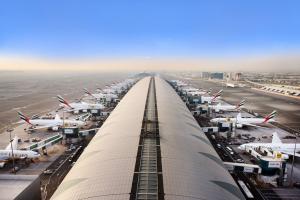
Thursday, July 28, 2016 — DUBAI, U.A.E., 28 July, 2016: Emirates aircraft have travelled over 432 million kilometres since January 2016, the equivalent of traversing the globe more than 10,700 times. Click here to watch a time-lapse video capturing Emirates arrivals and departures at its hub in Dubai.
A typical week sees the airline operating more than 3,600 flights, with over 96,000 flights operated in the first half of 2016. Emirates is the world’s largest international airline currently serving 154 destinations across 81 countries on six continents operating 252 aircraft. The airline is also the largest operator of the Airbus A380, with 81 of these double-decker aircraft serving over 40 global destinations. Over 50 million passengers have flown on the Emirates A380 since it began service in 2008. Emirates also operates the largest family of Boeing 777 aircraft, with 157 of these popular wide-bodies connecting Dubai to 109 destinations around the world. The Emirates Boeing 777 has flown over 226 million passengers since 2004.
Gatwick Airport has announced it is increasing its investment in improving the airport over the next several years by an extra £200 million.
Since becoming privately owned in 2009, around £1.3 billion has been spent on developments to the airport and with this latest increase in investment, the overall spend is expected to hit £2.5 billion by 2021.
The new Capital Investment Programme (2016 to 2021) includes expansions to the North and South Terminal departure lounges and immigration halls, improvements to the shopping facilities, further parking stands for aircraft and taxiway optimisation.
The developments to the airport are being made due to the significantly increasing number of passengers using it. Over the past seven years, the number of annual passengers has increased from 31 million to 41 million. The new investment will also allow for further plans to be put forward as to how to offer the best experience for the increasing amount of passengers.
Gatwick Airport’s CEO, Stewart Wingate, said: “As Gatwick rapidly approaches full capacity, this increased investment paves the way for our second runway project. As we enter a new era for Britain, we must be agile and decisive as a country to show the world that we are open for business.
“This investment will also make sure that we can continue Gatwick’s record growth and transformation. Our total investment since coming into private ownership now stands at £2.5 billion as we operate the world’s most efficient single runway airport.”
The Mayor of London, Sadiq Khan, has also visited the airport and is fully behind the further investment: “Gatwick is the front door to London for millions of visitors to our city and I salute their decision to spend another £200m on improvements to the airport. They have put together a formidable plan that is a fantastic display of their confidence in London.”
Process consolidation at key Westland meat plant
In 2015 ANZCO implemented a policy to centralise process rendering on its Canterbury plant at Ashburton. This was part of ANZCO’s strategy of applying to the best advantage the geographical spread of its New Zealand-wide processing sites in order to achieve freshness of products.
The consolidation meant that the ANZCO plant at Kokiri, near Greymouth, now concentrated on meat cuts and associated chilling and blast freezing along with hide preservation and products in thepharmaceutical sphere.
It also meant that the Kokiri plant was now required to transport to the centralised Canterbury plant all its rendering by products for further processing.
Enter now Napier Engineering and Contracting the specialist food processing machinery engineer in the medium-to-heavy capability range.
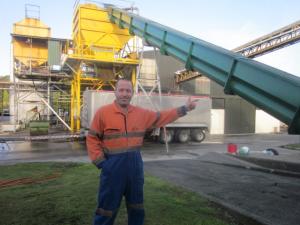
Napier Engineering now installed at ANZCO at Kokiri the collection, conveyor, and delivery conduit that ensured the rapid and sealed delivery of the processing by products to refrigerated transport.In the photograph the conveyor system operator at ANZCO’s Kokiri plant Steve Kilkelly points to the screw elevator that takes the by-products from the plant to the loading system to be transported to ANZCO at Ashburton.
From the MSCNewsWire reporters' desk Friday 29 July, 2016

Entries for this year's New Zealand Food Awards are up 62 per cent on last year.
Entries for this year’s New Zealand Food Awards have now closed, with a record number of entries for new products vying to be the best of the best in New Zealand’s food and beverage industry.
Massey University Vice-Chancellor Steve Maharey says the response from the food and beverage industry has been incredibly positive. “Product entries are up by 62 per cent compared to last year, reflecting the growing gravitas of the awards and the value the recognition brings to award winners.”
A broad range of entrants, including niche operators, large-scale food and beverage manufacturers, primary food producers, food service providers and ingredient supply companies, will compete to take out the top spot in a number of award categories. The categories for this year’s competition have been refreshed and include the new Food Safety Culture Award, which has proven popular with entrants, the Artisan Award and the Export Innovation Award, as well as the ultimate accolade of the Massey University Supreme Award.
Mr Maharey is thrilled with the response and says it reflects the growth and excellence of New Zealand’s food and beverage industry.
“It’s fantastic to see so many New Zealand businesses getting involved in this year’s New Zealand Food Awards,” Mr Maharey says. “This competition is all about providing a forum for helping local food and beverage producers to showcase the success and innovation of their products and businesses.”.
“The awards enable companies to boost their profile and achieve recognition for their brands and businesses. We look forward to seeing the results and wish the entrants all the best as judging commences,” Mr Maharey says.
Owned and organised by Massey University, the New Zealand Food Awards recognise innovation and excellence by our largest export sector. The annual programme, which has been running since 1987, celebrates new initiatives in New Zealand food and beverage production, showcasing the best of New Zealand’s food industry.Judging about to get underway
Judging begins on August 9 whereby entrants put forward their products to an expert judging panel consisting of Jo Elwin, Ray McVinnie, Jeff Scott and Nici Wickes, receive feedback, and benchmark themselves against industry peers, which provides valuable insights for future development and approaches.
The finalists will be announced on September 1 and will then go on to compete for award titles. Winners will be announced at a gala dinner at the Auckland Museum, MC’d by broadcaster and food critic Jesse Mulligan, on October 13.
Winning products are eligible to use the New Zealand Food Awards “Quality Mark”, which highlights the superiority of their products to both consumers and industry, and can help boost sales and distribution domestically and internationally.
The New Zealand Food Awards is made possible thanks to Massey University and the family of strategic and supporting partners - Auckland Tourism Events and Economic Development, Countdown, FoodHQ, The Foodbowl, The New Zealand Institute of Food Science and Technology, Ministry for Primary Industries, New Zealand Trade & Enterprise, NZME, Review Publishing, XPO Exhibitions and Villa Maria.
For key dates and more information, please visit www.foodawards.co.nz.
Prime Minister and Minister of Tourism John Key today announced applications are open for further funding to maintain and enhance the quality of the New Zealand Cycle Trail.
This is the fifth round of funding through the Maintaining the Quality of Great Rides Fund.
“This funding is part of the Government’s $8 million investment over four years to ensure the Great Rides are maintained to their current world-class standards,” Mr Key says.
“Already $3.2 million has been approved for 37 projects across 18 Great Rides. The projects include surface enhancements, safety barriers, an underpass installation, track re-routing and storm damage repairs.
“The New Zealand Cycle Trail showcased our diverse landscapes to an estimated one million people last year and that number is expected to be even higher this year,” Mr Key says.
“The trails have become a significant asset to our growing tourism industry. It’s vital that each trail is maintained to the highest possible standard so that riders continue to have a safe and enjoyable experience.”
Budget 2016 included additional funding of $25 million over four years, bringing the total invested in the New Zealand Cycle Trail to $75 million.
Applications for this round of funding will close on 31 August 2016.
More information can be found at: http://www.mbie.govt.nz/info-services/sectors-industries/tourism/nga-hae
A release from the Beehive July 27, 2016
National Road Carriers chairperson Chris Carr has praised local stakeholders for the ease with which the new verified gross mass (VGM) regulations for packed international containers have been adopted.
Stating that New Zealand is in fact “leading the world” in this regard, Mr Carr notes the country even moved to the new regulations on a voluntary basis two weeks prior to the July 1 international deadline.
“A significant amount of work with industry groups went into planning the introduction, with exporters, forwarders, road and rail operators, ports, shipping lines and Maritime New Zealand (MNZ) all involved in working out the best approach, while recognising that the changes to procedures were significant,” he says.
“Discussions with Ports of Auckland, Port of Tauranga and CentrePort show that there have been few issues, and none of the ports had turned cargo away.”
Mr Carr also highlights the role MNZ played in successfully lobbying the International Maritime Organization for dispensation to allow containers shipped prior to July 1 to be handled internationally for a period of three months.
The international regulations were formulated after investigations into the foundering of a containership off the English coast in 2007 revealed that incorrectly-declared container weights had contributed to the failure.
The impact of the UK’s exit from the European Union on the country’s $30bn machinery production market will depend largely on whether it makes a “soft” or a “contentious” exit from the EU, according to a new analysis from IHS Markit.
This year, more than 37% of the UK’s machinery exports will go to the EU. Thus almost any EU response to Brexit will affect machinery production and the UK’s machinery exports adversely.
Even before Brexit, IHS Markit was predicting that the UK’s machinery production sector would contract by 1.6% during 2016, before reviving to deliver an average growth of 3% in the period to 2020. The sector had been in decline, falling 11.2% year-on-year, mainly as a result of its exposure to commodity exporters in South America and elsewhere.
The analyst forecasts that Brexit will reduce global GDP growth in 2017, with the UK being the hardest hit, followed by Europe (including Spain, Germany, France and Poland) – and even economies as far away as Singapore and Brazil.
In a “contentious” exit, the EU would seek to make trade rules and regulations that would result in fewer machinery imports from the UK. It could even re-route entire supply chains out of the UK. In this scenario, the EU would strictly enforce the Common Customs Tariff that applies to goods crossing its external borders.
Currently, says IHS Markit, EU importers are committed to existing manufacturing sites in the UK, and many have said there no immediate changes are needed. However, others have stated that supply conditions will have to be renegotiated.
A “soft” exit would require renegotiating of terms of trade, which could result in some trade friction, but would be on amicable terms. A tariff-free trade pact with the EU could, in fact, benefit some manufacturers in the UK and provide long-term potential benefits, suggests IHS Markit senior data analyst, Rolando Campos.
Read the full article here from Drive & Control
The NZI Sustainable Business Network Awards, which have been running for 14 years, are the pre-eminent and longest-standing sustainability awards in New Zealand.
They celebrate the contribution businesses, government agencies, social enterprises and individuals are making to transforming New Zealand to a model sustainable nation.
The Awards, which are free to enter and open to anyone in New Zealand, are a great way to celebrate your sustainability progress.
Entries are now open to the 2016 Awards, closing on 1st August.
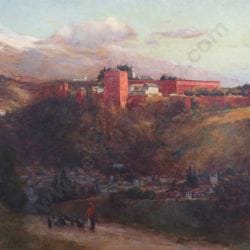
Palace of the Alhambra, Spain
By: Charles Nathaniel Worsley (1862-1923)
From the collection of Sir Heaton Rhodes
Oil on canvas - 118cm x 162cm
Valued $12,000 - $18,000
Offers invited over $9,000
Contact: Henry Newrick – (+64 ) 27 471 2242
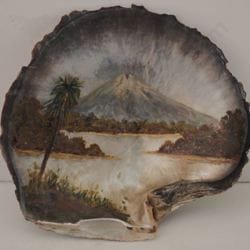
Mount Egmont with Lake
By: John Philemon Backhouse (1845-1908)
Oil on Sea Shell - 13cm x 14cm
Valued $2,000-$3,000
Offers invited over $1,500
Contact: Henry Newrick – (+64 ) 27 471 2242

|
|