
Founded by Max Farndale 1947 - 2018

Despite widespread agreement that real-time aircraft tracking must be at the top of the air transport industry’s list of priorities, the adoption of tracking solutions continues to be slower than everyone would like. ICAO’s mandate that airlines must adopt 15-minute position reporting as standard will not be implemented until November 2018, while from January 2021 aircraft will need to satisfy the Standards and Recommended Practices (SARPS) on “distress” tracking, which means aircraft location must be reported at least every minute when an aircraft is in distress.
Offering its thoughts on the 2018 deadline, IATA, which has liaised closely with ICAO on the development of the aircraft tracking standards, told FTE in a statement: “The November 2018 tracking requirement was arrived at through the ICAO process with involvement from all stakeholders. In order to achieve it, we are working through the Normal Aircraft Tracking Implementation Initiative 2 (NATII 2) to now create guidance material to help airlines and regulators to implement the tracking standard. The recently adopted Standards and Recommended Practices and the newly proposed risk-based SARP to complement the existing Standards, will become effective from March 2017, giving the industry 18 months to assess where they are, in order to comply with the November 2018 deadline.”
Not everyone is happy with these timeframes, though, and as has been widely reported, Emirates President Sir Tim Clark labelled the slow rate of progress a “disgrace” at this month’s IATA AGM. While Clark’s strong words highlight the frustration felt by many both within and outside of the industry, it is important to note that in some areas more urgent action is being taken to address the need for real-time tracking. For instance, the Civil Aviation Authority of Singapore (CAAS) announced three months ago that all Singapore-based airlines must meet the 15-minute aircraft position reporting standard by 1 July 2016.
Dozens of airlines have also taken a proactive approach and SITAONAIR told FTE that around 40 carriers have now adopted its FlightTracker product, which uses existing equipment and re-purposes air traffic control data to provide consistent monitoring throughout the flight. Other suppliers are also active in this space. Panasonic Avionics announced earlier this month that it is now offering global tracking to all Satcom customers, which it says will enable it to “seamlessly enable flight tracking on over 1,500 aircraft, and we expect to extend this capability to over 3,500 aircraft over the short term”. Meanwhile, Rockwell Collins offers flight tracking via its ARINC MultiLink service and the Aireon Aircraft Locating and Emergency Response Tracking (ALERT) service is undergoing tests with the Irish Aviation Authority and is due to go live in 2018.
Whose responsibility is flight tracking?
As Paul Gibson, Portfolio Director, AIRCOM, SITAONAIR, explained to FTE, there are still some questions to be answered before real-time aircraft tracking becomes the norm rather than the exception. “I think there are a couple of issues,” he started. “One is I think there’s some debate in the industry about whether tracking is the responsibility of the air navigation service providers or the airlines. I think that debate hasn’t been fully resolved yet so I think to some extent at least the airlines are saying if it’s a safety issue then that’s what ATC is for. But the ICAO recommendation for 15-minute tracking was aimed at being something that the airlines would be expected to meet. The other thing is – and this is an issue we’re trying to help with – the lack of clarity on the technology and how it can be implemented easily. The OEMs – Boeing and Airbus – are looking at additional hardware on the aircraft in future generation of aircraft that could help with tracking. Our position has been that the tracking technology already on the aircraft is just not very easy for the airlines to use effectively. That’s the problem that we’ve been trying to solve.” Gibson explained that a wide variety of technologies exist to track aircraft, including ADS-B, ADS-C and ACARS, and SITAONAIR has tapped into these to create its own flight tracking service. However, he stated: “Ultimately, the solution will include some new equipment on the aircraft.”
He continued: “One of the issues is, and it’s kind of ironic, that the industry is rightly very focused on safety and has a lot of regulation and processes around it to keep that safety record. The ironic part is this means that something like putting a new tracking device on an aircraft doesn’t happen quickly. There’s a lot of procedure and regulation to go through before that can happen. From an airline perspective it’s very expensive and takes a very long time to install new technology onboard the aircraft. Also, from an airline’s point of view it’s reasonable for them to wait for the industry to have a standard for that equipment on the aircraft before they deploy it widely. Ultimately, that technology would need to include some kind of battery-powered back-up, because the tracking technology that is on the aircraft today is obviously reliant on the main power buses, so if for whatever reason those power buses are interrupted, then you lose the tracking, which is arguably the time when you most need it.”
SITAONAIR, Gibson explained, is now exploring how it can leverage the broadband connectivity on connected aircraft to stream data – such as engine data and aircraft health data – based on a trigger from FlightTracker. “It’s not reasonable to do that on current satellite technology all the time from all aircraft,” he said, “but it’s certainly something you could do when you need to.”
Clearly, industry suppliers are making concerted efforts to help improve and drive uptake of real-time flight tracking, but with the implementation of ICAO’s flight tracking standard not coming into effect until late 2018, it seems there is only so much that can be achieved before then. All things considered, the implementation date cannot come soon enough.
Source: FutureTravelExperience June 2016
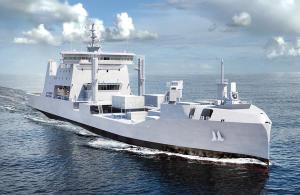
South Korea’s largest and financially-troubled shipbuilder Hyundai Heavy Industries Co. obtained an order for a combat support ship from the navy of New Zealand - the first order in the kind in 30 years.
The Korean shipbuilder announced that it Monday signed a contract for the construction of a combat logistics ship of 23,000 tons at full load designed mainly to carry oil for battleships. The final agreement was signed in Wellington, New Zealand by Kim Jung-hwan, an executive in charge of shipbuilding business of the Korean company, and Helene Quilter, Secretary of Defense of New Zealand.
The Korean shipbuilder was selected as a preferred bidder in December last year upon beating bidders from Germany and Spain. Negotiations panned out for seven months. The contract is estimated to be worth $350 million.
The support ship would replace Endeavor, a 12,000 ton naval tanker delivered to the navy of New Zealand in 1987. The shipyard will begin the construction in February 2018 and deliver the vessel by December 2019.
Hong Kong-based Swiss-Belhotel will open its first Australian property in Brisbane on 1 November, 2016.
Located at 218 Vulture Street South Brisbane, the Swiss-Belhotel Brisbane is in close proximity to the CBD, international sporting facilities, Brisbane Convention & Exhibition Centre and three large hospitals.
In addition to its 134 guest rooms, the property will have a corporate lounge, two banquet and meeting rooms, an indoor pool and gymasium and onsite parking.
Industry veteran, Dinah-Louise Marrs has been appointed general manager. - Meeting Newz July 26, 2016

In New Zealand those in the aquaculture industry play a vital role in protecting and developing a valuable food source. Tony Rumbold, principal of SCANZ Technologies, is one of these people and supports the work of the TED organisation in it's efforts to spread information on the challenges that the world faces.
TED is a nonprofit devoted to spreading ideas, usually in the form of short, powerful talks (18 minutes or less). TED began in 1984 as a conference where Technology, Entertainment and Design converged, and today covers almost all topics — from science to business to global issues — in more than 100 languages. Meanwhile, independently run TEDx events help share ideas in communities around the world.
The subject of this particular talk is "The Case For Fish Farming"
We're headed towards a global food crisis: Nearly 3 billion people depend on the ocean for food, and at our current rate we already take more fish from the ocean than it can naturally replace.
In this fact-packed, eye-opening talk, entrepreneur and conservationist Mike Velings proposes a solution: Aquaculture, or fish farming.
"We must start using the ocean as farmers instead of hunters," he says, echoing Jacques Cousteau. "The day will come where people will demand farmed fish on their plates that's farmed well and farmed healthy — and refuse anything less."
Why you should listen to Mike Velings a man who understands the potential for business to create durable solutions to complex world problems.
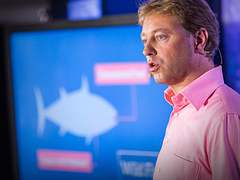 Mike Velings is the co-founder and the driving force behind Aqua-Spark, a global investment fund for sustainable aquaculture, combining a healthy financial profit with environmental and social impact. A lifelong entrepreneur, Mike has spent decades jumpstarting a range of successful businesses. Among other ventures, he co-founded Connexie, which has helped catalyze a professional employment industry across the Netherlands.
Mike naturally combines his business background with environmental and social engagement. He understands the potential for business to create durable solutions to complex world problems. With this in mind, Mike founded Aqua-Spark, an investment company that assists entrepreneurs across the globe in realizing their visions of a startup with a world-changing element. Through Aqua-Spark he has invested in a broad range of ventures over the years — both in the developed and developing world.
Mike serves on several boards and is a member of the Conservation International’s Leadership Council as well as an Honorary Global Marine Fellow.
Here in New Zealand Tony Rumbold is a person who has considerable knowledge of the Aqualculture industry. It is his passion so should there be any points that arise from this talk then he is an ideal person to have a chat with. His phone number is 09 520 2544 and email: This email address is being protected from spambots. You need JavaScript enabled to view it.

In New Zealand those in the aquaculture industry play a vital role in protecting and developing a valuable food source. Tony Rumbold, principal of SCANZ Technologies, is one of these people and supports the work of the TED organisation in it's efforts to spread information on the challenges that the world faces.
TED is a nonprofit devoted to spreading ideas, usually in the form of short, powerful talks (18 minutes or less). TED began in 1984 as a conference where Technology, Entertainment and Design converged, and today covers almost all topics — from science to business to global issues — in more than 100 languages. Meanwhile, independently run TEDx events help share ideas in communities around the world.
The subject of this particular talk is "The Case For Fish Farming"
We're headed towards a global food crisis: Nearly 3 billion people depend on the ocean for food, and at our current rate we already take more fish from the ocean than it can naturally replace.
In this fact-packed, eye-opening talk, entrepreneur and conservationist Mike Velings proposes a solution: Aquaculture, or fish farming.
"We must start using the ocean as farmers instead of hunters," he says, echoing Jacques Cousteau. "The day will come where people will demand farmed fish on their plates that's farmed well and farmed healthy — and refuse anything less."
Why you should listen to Mike Velings a man who understands the potential for business to create durable solutions to complex world problems.
Mike Velings is the co-founder and the driving force behind Aqua-Spark, a global investment fund for sustainable aquaculture, combining a healthy financial profit with environmental and social impact. A lifelong entrepreneur, Mike has spent decades jumpstarting a range of successful businesses. Among other ventures, he co-founded Connexie, which has helped catalyze a professional employment industry across the Netherlands.
Mike naturally combines his business background with environmental and social engagement. He understands the potential for business to create durable solutions to complex world problems. With this in mind, Mike founded Aqua-Spark, an investment company that assists entrepreneurs across the globe in realizing their visions of a startup with a world-changing element. Through Aqua-Spark he has invested in a broad range of ventures over the years — both in the developed and developing world.
Mike serves on several boards and is a member of the Conservation International’s Leadership Council as well as an Honorary Global Marine Fellow.
Here in New Zealand Tony Rumbold is a person who has considerable knowledge of the Aqualculture industry. It is his passion so should there be any points that arise from this talk then he is an ideal person to have a chat with. His phone number is 09 520 2544 and email: This email address is being protected from spambots. You need JavaScript enabled to view it.
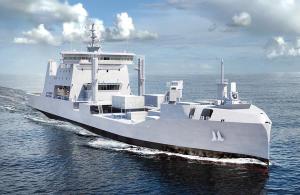
South Korea’s largest and financially-troubled shipbuilder Hyundai Heavy Industries Co. obtained an order for a combat support ship from the navy of New Zealand - the first order in the kind in 30 years.
The Korean shipbuilder announced that it Monday signed a contract for the construction of a combat logistics ship of 23,000 tons at full load designed mainly to carry oil for battleships. The final agreement was signed in Wellington, New Zealand by Kim Jung-hwan, an executive in charge of shipbuilding business of the Korean company, and Helene Quilter, Secretary of Defense of New Zealand.
The Korean shipbuilder was selected as a preferred bidder in December last year upon beating bidders from Germany and Spain. Negotiations panned out for seven months. The contract is estimated to be worth $350 million.
The support ship would replace Endeavor, a 12,000 ton naval tanker delivered to the navy of New Zealand in 1987. The shipyard will begin the construction in February 2018 and deliver the vessel by December 2019.
Continuing to strengthen New Zealand borders 25 July 2016 - All travellers flying to, from or through New Zealand will now be checked against INTERPOL’s Stolen and Lost Travel Documents (SLTD) database in a move that will make the border even safer. een implemented for all travellers at the time of check-in.
This new security check will take place at the time of check-in. Travellers should notice no difference to the current check-in process as this check will integrate seamlessly with Immigration New Zealand’s (INZ) Advance Passenger Processing (APP) checks that airlines already conduct for people travelling to New Zealand.
Immigration New Zealand’s (INZ) Assistant General Manager, Peter Devoy says INZ already has robust processes in place to screen people coming to New Zealand.
“Keeping New Zealand borders secure is a top priority for us,” Mr Devoy says. “Expanding on our existing technology ensures that we are able to provide even greater border controls for New Zealand.”
If a travel document has been reported lost or stolen to INTERPOL, New Zealand’s APP system will prevent the person from boarding the flight and airlines will contact INZ staff at the border for further advice.
During the 2015-16 financial year (1 July 2015 – 30 June 2016) 2,930 people were denied boarding a flight to New Zealand, compared with 2,280 the previous year. Most of the cases related to passengers not meeting immigration entry requirements.
Continuing to strengthen New Zealand borders 25 July 2016 - All travellers flying to, from or through New Zealand will now be checked against INTERPOL’s Stolen and Lost Travel Documents (SLTD) database in a move that will make the border even safer. een implemented for all travellers at the time of check-in.
This new security check will take place at the time of check-in. Travellers should notice no difference to the current check-in process as this check will integrate seamlessly with Immigration New Zealand’s (INZ) Advance Passenger Processing (APP) checks that airlines already conduct for people travelling to New Zealand.
Immigration New Zealand’s (INZ) Assistant General Manager, Peter Devoy says INZ already has robust processes in place to screen people coming to New Zealand.
“Keeping New Zealand borders secure is a top priority for us,” Mr Devoy says. “Expanding on our existing technology ensures that we are able to provide even greater border controls for New Zealand.”
If a travel document has been reported lost or stolen to INTERPOL, New Zealand’s APP system will prevent the person from boarding the flight and airlines will contact INZ staff at the border for further advice.
During the 2015-16 financial year (1 July 2015 – 30 June 2016) 2,930 people were denied boarding a flight to New Zealand, compared with 2,280 the previous year. Most of the cases related to passengers not meeting immigration entry requirements.
Trade Minister Todd McClay has today reiterated that the Government has sought and received assurances from the Chinese Government that any competition issues would not impact on trade between the two countries.
Mr McClay is responding to reports that retaliatory action could be imposed if an investigation is launched into allegations of steel dumping.
“On my return from Indonesia I asked my office for a full review of the broader issues around this matter.
“I want to make it clear today that there have been discussions and limited correspondence over the past few months as the Ministry of Foreign Affairs and Trade has endeavoured to assess the veracity of these reports.
“I remain limited in what I can say as there are legislative constraints around the reporting of competition complaints that are not yet under investigation. These remain confidential until such time as any investigation is launched and publicly notified.
“Having said that, at the time I should have requested a more thorough briefing before I responded to questions on this issue.
“I have apologised to the Prime Minister for not being able to provide more details at the time.
“I would like to reiterate that through our engagement on this issue we have sought and received assurance from the Chinese Government that any concerns around retaliatory action are unfounded.
“I stand by my view the assurances should give our exporters confidence that our trading relationship with China remains in good heart.”
New forest harvesting technology revealed today in Nelson sets its sights on further increasing safety in steep land harvesting operations, Associate Primary Industries Minister Jo Goodhew says.
The new ‘tele-operation’ technology provides out-of-harm’s way operation of a purpose-built tracked feller-buncher forest harvester, from the safety of a separate operator cabin and console.
The breakthrough is part of Steepland Harvesting, a 6-year, $6 million Primary Growth Partnership (PGP) programme between the Ministry for Primary Industries (MPI) and a consortium of forestry companies and contractors, led by Future Forests Research Ltd (FFR).
“The successful development, installation and demonstration of the tele-operated harvester builds on the Steepland Harvesting programme’s successful integration of remote control technology into a forest harvester in 2015,” says Ms Goodhew.
“Tele-operation of the tracked harvester enables trees to be felled and bunched by remote control, beyond line-of-sight on steep slopes, which is believed to be a world first.
“It marks a big advance in the safety of forestry harvesting operations, while improving the operator’s environment and potentially increasing productivity. It is a fantastic achievement for the Steepland Harvesting PGP programme and for New Zealand’s forest industry as a whole.”
The Steepland Harvesting programme has delivered a number of innovations aimed at keeping forest workers safe, while increasing harvesting productivity. This includes development of the ClimbMAX harvester, a ground-based, winch-assisted machine which can fell and bunch trees on steep slopes of up to 45 degrees.
“Eight of the million-dollar ClimbMAX harvesters are now operating commercially in Canada and New Zealand, with the ninth machine recently shipped to Canada and the first machine sold into the United States is currently being built.”
Successful commissioning of the tele-operation control system is the latest result from three-and-a-half years of design and engineering research and development by the FFR team involving Scion, Cutover Systems Limited and ADM Design Ltd, working with harvesting contractors Ross Wood and Simon Rayward of Wood Contracting Nelson Ltd.
“The Steepland Harvesting programme, and this latest innovation in harvesting technology, is a clear example of the value of government and industry working together to keep forestry workers safe and improve productivity in forest operations,” Mrs Goodhew says.

Palace of the Alhambra, Spain
By: Charles Nathaniel Worsley (1862-1923)
From the collection of Sir Heaton Rhodes
Oil on canvas - 118cm x 162cm
Valued $12,000 - $18,000
Offers invited over $9,000
Contact: Henry Newrick – (+64 ) 27 471 2242
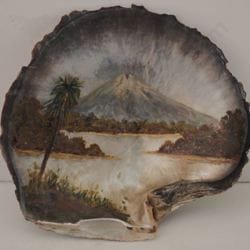
Mount Egmont with Lake
By: John Philemon Backhouse (1845-1908)
Oil on Sea Shell - 13cm x 14cm
Valued $2,000-$3,000
Offers invited over $1,500
Contact: Henry Newrick – (+64 ) 27 471 2242

|
|